
When your air conditioner starts blowing warm air, it’s a sign that the essential heat-transfer process has been interrupted. Taking fast action is crucial, as operating the system while it’s malfunctioning can lead to serious damage, particularly to the expensive compressor.
When an AC is blowing warm air, the system is running under conditions that cause excessive heat and stress. A frozen coil or a refrigerant leak forces the compressor to work harder with less lubrication and cooling, leading to premature mechanical failure. Replacing a faulty capacitor or cleaning a dirty coil is relatively inexpensive, but replacing a burned-out compressor can cost thousands of dollars, making proactive maintenance and quick troubleshooting vital.
Here are the most common reasons for warm air and steps you can take.
- Incorrect Thermostat Settings
- Dirty or Clogged Air Filter
- Refrigerant Issues (Low Charge/Leak)
- Compressor or Electrical Problems
- DIY Guide: Checking and Replacing Your Air Filter
Contact Ideal Heating today for a comprehensive inspection to discover why your AC is blowing warm air and for an expert fix.
Key Takeaways
| Issue | Homeowner Fix? | Call a Pro If… | Critical Warning |
| Thermostat | Yes (Change settings) | Outdoor unit won’t turn on or thermostat is blank. | Running on “Fan On” wastes energy. |
| Dirty Filter | Yes (Replace filter) | Coils repeatedly freeze after filter replacement. | Can cause coil freezing and compressor failure. |
| Low Refrigerant | NO | ALWAYS. It’s a closed system leak. | Turn the unit OFF immediately to prevent compressor burnout. |
| Compressor/Electric | Limited (Reset breaker once) | Breaker trips again, or outdoor unit is silent. | Do not touch continuously tripping breakers. |
1. Incorrect Thermostat Settings
This is the easiest fix and should always be your first check.
How it Affects Cooling
If the thermostat mode is set to “Heat” or the fan is set to “On” instead of “Auto,” the system’s compressor (the cooling engine) will not activate. The fan simply circulates existing indoor air, which often feels warm, especially if it’s drawing air through warm ductwork.
Homeowner Check & Fix
Check the Mode: Ensure the setting is on “Cool” or the snowflake icon.
Check the Temperature: Verify the setting is lower than the current room temperature.
Check the Fan: Set the fan to “Auto”. This ensures the fan only runs when the system is actively cooling.
When to Call a Pro
If the settings are correct, but the outdoor unit still won’t engage, or if the thermostat screen is blank/malfunctioning, you may have a wiring fault or a failing thermostat requiring professional repair or replacement.
2. Dirty or Clogged Air Filter
A heavily soiled filter is the most common cause of reduced airflow and is easily preventable.
How it Affects Cooling
A thick layer of dust and dirt severely restricts the volume of air that can pass over the evaporator coil (the indoor cooling coil).
Airflow Blockage: The restricted airflow prevents proper heat transfer.
Coil Freezing: The lack of warm air moving over the coil causes its temperature to drop dangerously low. Condensation on the coil then freezes into an insulating layer of ice, which stops all heat absorption and results in warm air output.
Homeowner Check & Fix
Inspect and Replace: Locate and remove the filter. If you cannot see light through it, it must be replaced. Refer to Section 6 for detailed steps.
Thaw a Frozen Coil (if necessary): If you see ice on the copper lines or the indoor coil, turn the AC off but set the fan to “On” for several hours to melt the ice. Do not run the AC again until the coil is completely thawed and the filter is replaced.
When to Call a Pro
If the coils freeze repeatedly, even with a clean filter, it suggests an underlying problem with the refrigerant charge or the metering device, which requires a technician.
3. Refrigerant Issues (Low Charge/Leak)
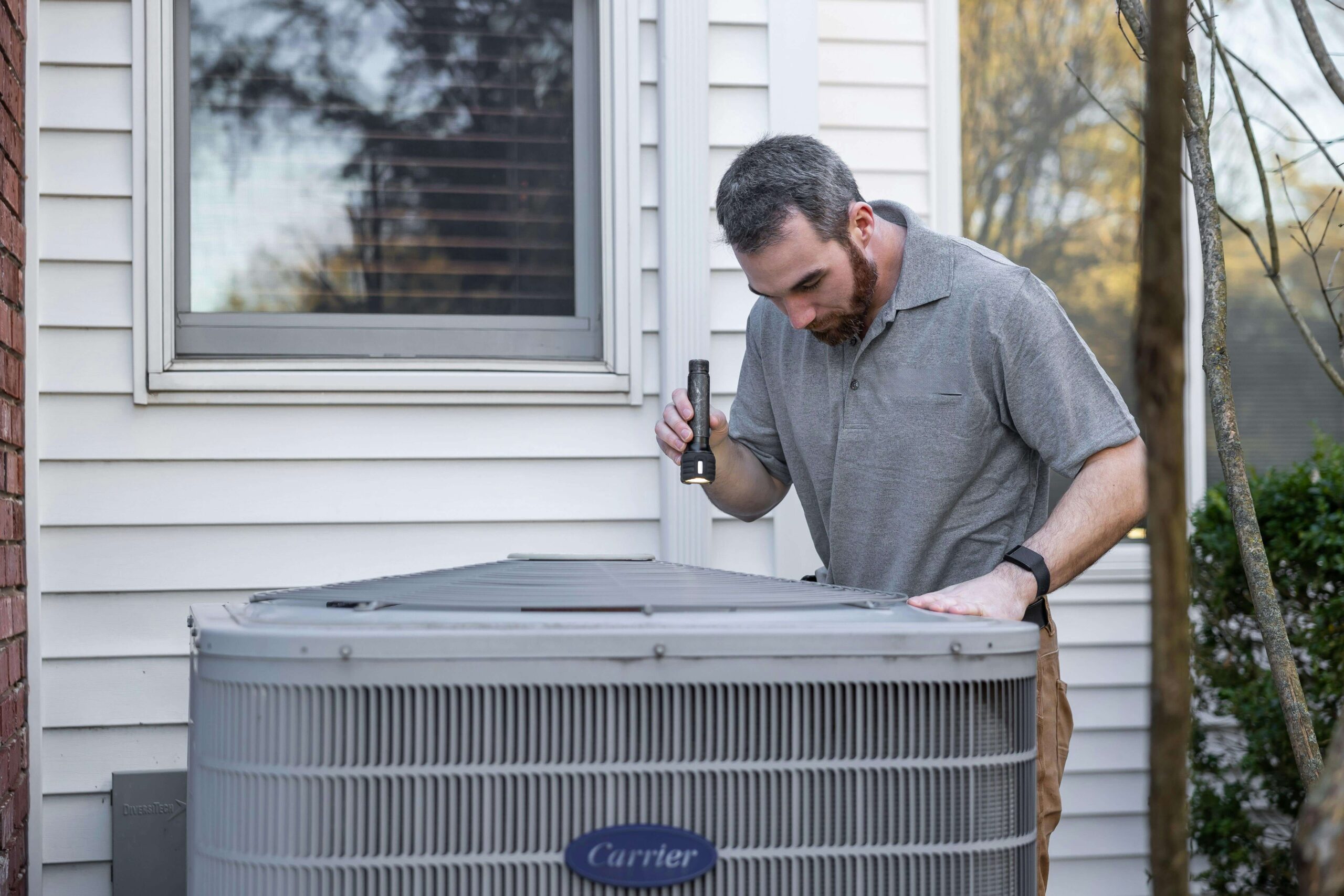
Refrigerant is the vital chemical compound that transfers heat. Since it operates in a sealed loop, a low level means there is a leak.
How it Affects Cooling
With insufficient refrigerant, the system loses its ability to absorb heat from your home’s air. The unit will run constantly, struggling to cool the air, and only blowing warm or slightly cool air. This condition often leads to the evaporator coil freezing.
Homeowner Check & Fix
Warning Signs: Look for ice buildup on the larger copper line outside or listen for a distinct hissing or bubbling sound near the unit, which can indicate a leak.
Immediate Action: If you suspect a leak or see ice, turn the AC system off immediately at the thermostat and the breaker to prevent damage to the compressor.
When to Call a Pro
Handling refrigerant is illegal without EPA certification. A licensed technician must be called to locate and repair the leak and then recharge the system to the exact specifications.
4. Compressor or Electrical Problems
The compressor is the motor that pressurizes and circulates the refrigerant. It is the most expensive single component in the AC system.
How it Affects Cooling
If the compressor fails or loses electrical power, the refrigerant remains stagnant. The cooling cycle stops entirely, and the indoor fan simply blows warm, unconditioned air.
Tripped Breaker: A system overload or fault can cause the dedicated circuit breaker to trip, cutting power to the outdoor unit.
Failed Capacitor: A faulty capacitor is a common electrical issue that prevents the compressor or fan motor from starting.
Homeowner Check & Fix
Check the Outdoor Unit: If the indoor fan is running but the outdoor unit is silent, and still, it has lost power.
Check the Breaker: Locate the dedicated AC breaker in your electrical panel. If it’s tripped, flip it fully to the “Off” position, then firmly back to “On”. DANGER: If the breaker immediately trips again, DO NOT touch it.
When to Call a Pro
Any issue with the compressor, a continuously tripping breaker, or a faulty capacitor is a job for an HVAC professional. Running the system with these issues risks completely destroying the compressor.
5.DIY Guide: Checking and Replacing Your Air Filter
Regular filter maintenance is the easiest way to prevent warm air and costly repairs.
Step-by-Step Replacement Guide
| Step | Action | Notes |
| 1. Power Off | Set the thermostat to “Off” or, ideally, turn the power off at the circuit breaker. | This prevents dust from being sucked into the system while the filter is out. |
| 2. Locate the Filter | Find the filter cabinet. | Usually located in the return air grille (on a wall/ceiling) or near the indoor air handler/furnace (in a closet, attic, or basement). |
| 3. Remove & Inspect | Open the grille or filter slot and gently slide the old filter out. | Note the size printed on the side (e.g., 16x25x1). If it is dark gray, brown, or covered, it needs replacement. |
| 4. Identify Airflow | Crucial Step: Locate the small arrow printed on the side of the filter frame. | The arrow must point TOWARDS the air handler/furnace (in the direction of the air suck). |
| 5. Insert New Filter | Slide the new filter into the slot, ensuring the arrow points correctly. | It should fit snugly. Clean the grille area with a vacuum if necessary before closing. |
| 6. Power On | Close the cover securely and restore power at the breaker, then turn the system back to “Cool.” | Set a calendar reminder to check the filter every 30-90 days, especially during heavy use. |
Ideal Heating: Your First Call When AC Blowing Warm Air


Ideal Heating understands that an inefficient air conditioning system can be a real problem during our increasingly hot summers. Our professional technicians are fully TSSA-certified and specialize in diagnosing why your AC is blowing warm air, and how to fix it quickly.
By partnering with Ideal Heating to optimize your system, you gain:
Maximized Efficiency: Precision tuning and calibration to restore peak performance, immediately reducing unnecessary run-time and lowering your monthly energy bills.
Expert Diagnostics: Accurate identification of hidden issues like refrigerant leaks or sizing errors that DIY maintenance can’t catch.
Peace of Mind: Confidence that your system is running safely and delivering the most comfort for the least cost.
Priority Service: Preferred treatment and rapid response times should any unexpected issue arise, saving you from stressful emergency situations.
Don’t continue to pay for wasted energy. Be proactive and secure your home’s most vital systems today. With over 35 years of experience serving customers in the GTA and a 5-star rating on Google Reviews, we provide the ideal advice.