
Many homeowners only think about their HVAC system when it breaks down completely. However, there are numerous hidden problems that can silently drive up your energy bills and lead to costly repairs if left unaddressed.
Ignoring these subtle signs can result in a less efficient system, reduced comfort, and a significant dent in your wallet.
This comprehensive guide will uncover common but overlooked HVAC issues, provide expert insights on early identification, and explain how proactive measures can save you money and improve system efficiency.
- Leaky Ductwork: The Silent Energy Thief
- Clogged Air Filters: Restricting Airflow and Efficiency
- Failing Capacitors: A Small Part with a Big Impact
- Refrigerant Leaks: The Slow Drain on Performance
- Thermostat Malfunctions: Misreading the Comfort Levels
- Neglected Coils: Reducing Heat Transfer
- Undersized or Oversized Systems: An Inefficient Match
- The Importance of Regular Inspections and Professional Maintenance
Key Takeaways
Your HVAC system is a complex network of components working in harmony to keep your home comfortable. When even one of these components falters, it can trigger a domino effect, leading to decreased efficiency and increased energy consumption. The trick is to catch these issues before they escalate.
Leaky Ductwork: Can cause significant energy loss and uneven temperatures.
Clogged Air Filters: Restrict airflow, increase energy use, and reduce indoor air quality. Change regularly!
Failing Capacitors: Lead to difficulty starting or running HVAC motors.
Refrigerant Leaks: Reduce cooling capacity, increase energy consumption, and damage the compressor.
Thermostat Malfunctions: Result in inaccurate temperature control and inefficient operation.
Neglected Coils: Impair heat transfer, forcing the system to work harder.
Incorrect System Sizing: Leads to constant running (undersized) or short cycling (oversized), both inefficient.
Professional Maintenance is Crucial: Regular tune-ups can identify and fix hidden issues, saving you money and extending system life.
Ideal Heating’s Expertise: Our technicians are equipped to diagnose and resolve these hidden problems, ensuring optimal HVAC performance and comfort.
1. Leaky Ductwork: The Silent Energy Thief
Imagine paying to heat or cool air only for a significant portion of it to escape before reaching its intended destination. That’s precisely what happens with leaky ductwork.
Gaps, cracks, and poorly sealed connections in your duct system can lead to substantial energy loss, forcing your HVAC unit to work harder and longer.
How to Identify Leaky Ductwork
Uneven Temperatures: Some rooms are significantly hotter or colder than others.
High Energy Bills: A noticeable increase without a change in usage habits.
Dust Accumulation: Increased dust in your home could indicate leaks drawing in unfiltered air.
Audible Whistling/Hissing: In some cases, you might hear air escaping from ducts.
Solutions
Sealing ductwork is a specialized task. While some minor leaks can be temporarily patched with mastic sealant or foil tape, a professional inspection can identify and properly seal all leaks, ensuring maximum efficiency.
2. Clogged Air Filters: Restricting Airflow and Efficiency
Your air filter is the first line of defence against dust, pollen, and other airborne particles entering your HVAC system and home. However, a clogged filter becomes a significant obstacle, restricting airflow and making your system work harder to pull air through.
The Impact of Clogged Filters
Reduced Airflow: Leading to poor heating and cooling performance.
Increased Energy Consumption: The fan motor has to exert more effort, using more electricity.
System Overheating: Can cause components to wear out faster or even lead to system breakdowns.
Poor Indoor Air Quality: A clogged filter can no longer effectively trap pollutants.
Maintenance Tips
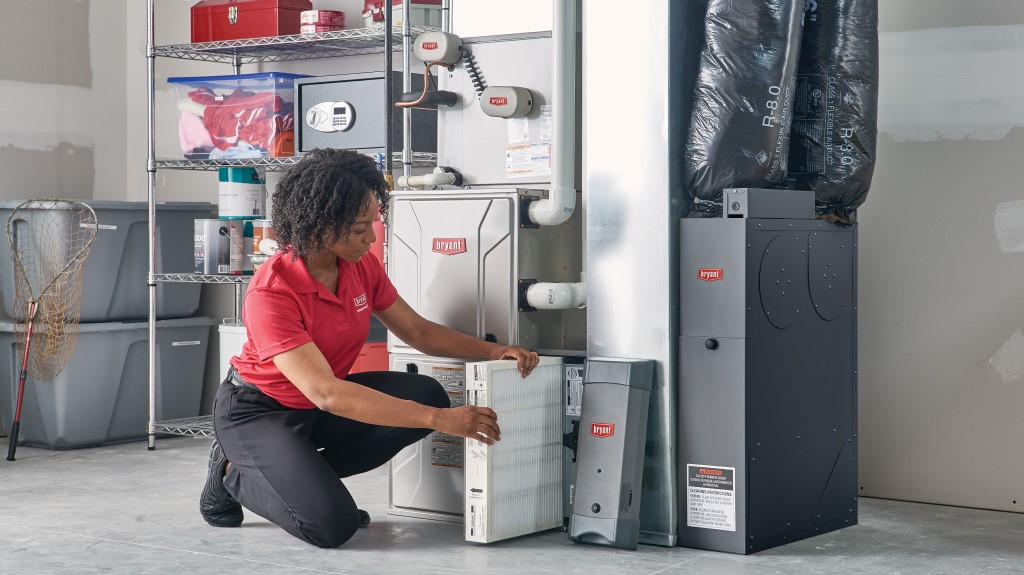
Inspect your air filter monthly and change it every 1-3 months, or more frequently if you have pets, allergies, or live in a dusty environment. This simple task is one of the most effective ways to maintain HVAC efficiency.
3. Failing Capacitors: A Small Part with a Big Impact
Capacitors are small, cylindrical components that provide the necessary jolt of electricity to start your HVAC system’s motors (fan and compressor) and keep them running smoothly. When a capacitor begins to fail, your system struggles to start or run efficiently.
Signs of a Failing Capacitor
Difficulty Starting: The unit takes longer to start, or makes clicking sounds without fully engaging.
Humming Sounds: The outdoor unit hums but doesn’t start.
Reduced Cooling/Heating: The system runs, but doesn’t produce adequate comfort.
Frequent Cycling: The unit turns on and off more often than usual.
Why Professional Help is Crucial
Capacitors store electrical charges even when the unit is off. Attempting to replace one without proper knowledge can be dangerous. Ideal Heating technicians can safely test and replace faulty capacitors.
4. Refrigerant Leaks: The Slow Drain on Performance
Refrigerant is the lifeblood of your air conditioning system, absorbing heat from your home and releasing it outdoors. A refrigerant leak not only diminishes your system’s cooling capacity but also forces it to work harder, consuming more energy and potentially leading to compressor failure.
Symptoms of a Refrigerant Leak
Warm Air from Vents: Despite the AC running.
Hissing Sounds: From the outdoor unit or refrigerant lines.
Ice on Coils: A clear sign of low refrigerant.
Higher Energy Bills: The system runs continuously to try to reach the set temperature.
The Environmental and Financial Cost
Refrigerant leaks are not only costly to repair but also harmful to the environment. Prompt detection and repair by a certified technician are essential.
5. Thermostat Malfunctions: Misreading the Comfort Levels
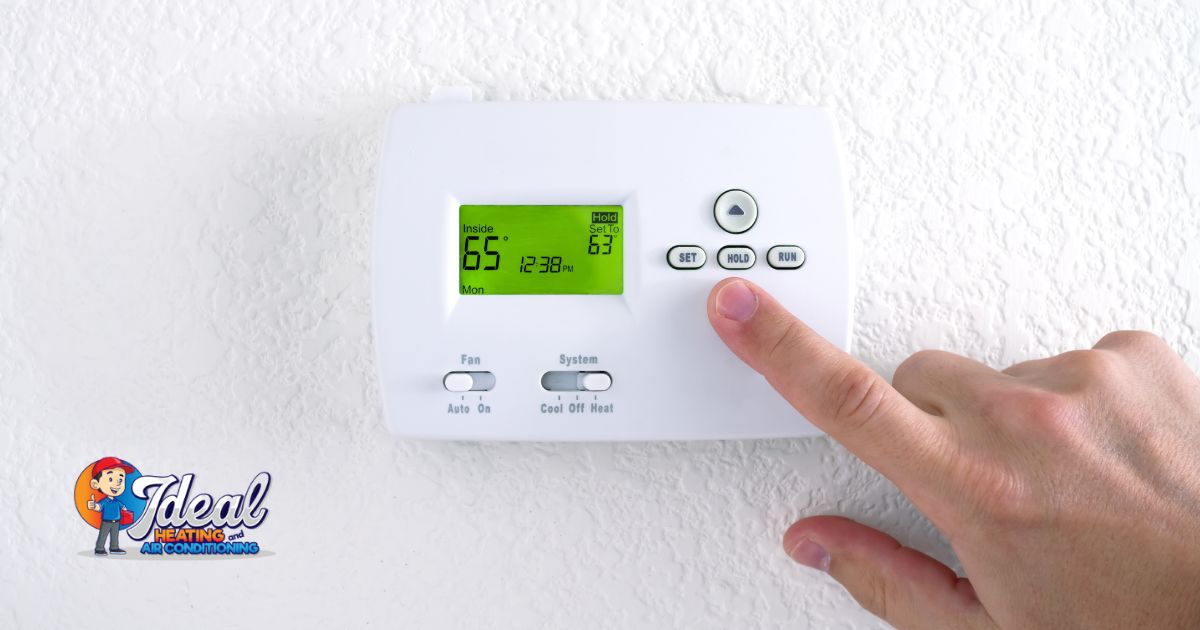
Your thermostat is the brain of your HVAC system. If it’s faulty, it can send incorrect signals, leading to your system running unnecessarily, failing to turn on, or cycling improperly.
Common Thermostat Issues
Inaccurate Readings: The thermostat displays a different temperature than the actual room temperature.
System Not Responding: The HVAC unit doesn’t turn on when commanded.
Short Cycling: The system turns on and off too frequently.
Blank Display: If it’s a digital thermostat, the screen might be off.
Troubleshooting
Check the batteries (if applicable) and ensure it’s set to the correct mode (heat/cool/auto). If problems persist, it may need recalibration or replacement.
6. Neglected Coils: Reducing Heat Transfer
Both the evaporator coil (indoors) and condenser coil (outdoors) are crucial for heat transfer. Over time, these coils can accumulate dirt, dust, and grime, creating an insulating layer that hinders their ability to absorb or release heat effectively.
Evaporator and Condenser Coils
Evaporator Coil (Indoor): Absorbs heat from your indoor air. When dirty, it can’t absorb heat efficiently, making your AC work harder.
Condenser Coil (Outdoor): Releases heat to the outside air. A dirty condenser coil struggles to dissipate heat, leading to higher head pressure and decreased efficiency.
Cleaning and Maintenance
Regular professional cleaning of both coils is vital for maintaining peak efficiency and preventing system strain.
7. Undersized or Oversized Systems: An Inefficient Match
An HVAC system that is incorrectly sized for your home will never operate efficiently, no matter how well maintained.
Undersized System: Will run almost continuously, struggling to reach desired temperatures, leading to premature wear and high energy bills.
Oversized System: Will “short cycle,” turning on and off too frequently. While it might cool quickly, it won’t effectively remove humidity, leaving your home feeling clammy and wasting energy with frequent starts.
The Problems with Incorrect Sizing
Incorrect sizing leads to discomfort, higher energy bills, and a shorter lifespan for your HVAC unit.
Professional Assessment
Only a professional HVAC technician can accurately calculate your home’s heating and cooling load to recommend the appropriately sized system.
8. The Importance of Regular Inspections and Professional Maintenance
Many of these hidden problems can be caught and rectified during routine professional maintenance. An annual tune-up for your heating system and another for your cooling system can pay for itself in energy savings and extended system life.
During a professional inspection, Ideal Heating technicians will:
Inspect and clean coils.
Check refrigerant levels and inspect for leaks.
Examine electrical connections and components, including capacitors.
Test thermostat accuracy.
Inspect ductwork for leaks.
Assess airflow and fan operation.
Lubricate moving parts.
Not Sure When to Replace HVAC System?
We Can Help.


Ready to Lower Your Energy Bills?
Don’t wait for a total system failure to address these hidden inefficiencies. Taking proactive steps today can save you thousands in future repairs and keep your monthly utility costs under control.
By partnering with Ideal Heating to optimize your system, you gain:
Maximized Efficiency: Precision tuning and calibration to restore peak performance, immediately reducing unnecessary run-time and lowering your monthly energy bills.
Expert Diagnostics: Accurate identification of hidden issues like refrigerant leaks or sizing errors that DIY maintenance can’t catch.
Peace of Mind: Confidence that your system is running safely and delivering the most comfort for the least cost.
Priority Service: Preferred treatment and rapid response times should any unexpected issue arise, saving you from stressful emergency situations.
At Ideal Heating, our mission is to ensure your home remains a sanctuary of comfort and efficiency all year round. Whether you suspect a leak or simply want the peace of mind that comes with a professional tune-up, our expert technicians are here to help.
Contact Ideal Heating today to schedule your comprehensive HVAC inspection and start saving on your next energy bill!
With over 35 years of experience serving customers in the GTA and a 5-star rating on Google Reviews, we provide the ideal advice.