
Deciding whether to repair your heating and cooling system or replace it entirely is one of the biggest maintenance decisions a homeowner can face. While we all want our HVAC units to last forever, there comes a point where “patching it up” costs more than a modern, efficient upgrade.
- Sign 1: The System is Over 10–15 Years Old
- Sign 2: Frequent and Costly Repairs
- Sign 3: Skyrocketing Energy Bills
- Sign 4: Unusual Noises and Smells
- Sign 5: Uneven Temperatures Throughout the House
- Sign 6: Excessive Dust and Poor Air Quality
- Sign 7: It Uses R-22 Freon
Key Takeaways
- The 50% Rule: If a single repair quote is 50% or more of the cost of a brand-new system, it is financially smarter to replace it.
- The 5,000 Rule: Multiply the age of the unit by the repair cost. If the total is over $5,000 (e.g., a 12-year-old unit needing a $500 repair), it’s time to shop for a replacement.
- Safety First: Older gas furnaces carry a higher risk of cracked heat exchangers, which can lead to carbon monoxide leaks. Newer units feature advanced safety shut-offs.
- Boost Home Value: A new HVAC system is one of the top “invisible” upgrades that increases home resale value and reassures potential buyers.
1. The System is Over 10–15 Years Old
Most central air conditioners last about 10–12 years, while gas furnaces can stretch to 15 or 20.
If your system is entering its second decade, it is living on borrowed time.
Why it matters:
Even if an old unit is “still running,” it is likely operating at a much lower efficiency than modern models. Modern systems often have SEER2 ratings (efficiency standards) that are double what was available 15 years ago, meaning an old unit is essentially a “money pit” regarding monthly energy waste.
Quick Diagnosis:
Locate the manufacturer’s plate on your outdoor AC unit or indoor furnace. It often lists the manufacture date. If you see a date from the mid-2000s, start planning your replacement now.
2.Frequent and Costly Repairs
Does your HVAC technician have a permanent parking spot in your driveway? If you’ve had two or more significant repairs in the last two years, your system is signalling that a “total breakdown” is imminent.
Why it matters:
HVAC components are interconnected. When a major part like a compressor or blower motor fails, it often puts extra strain on the remaining old parts, leading to a “domino effect” of repairs. Spending $500 today and $800 next season adds up; that money is better spent as a down payment on a reliable new unit with a fresh 10-year warranty.
Quick Diagnosis:
Look back at your bank statements. If the total cost of repairs over the last 24 months equals more than 30% of a new system’s price, you are likely throwing good money after bad.
3. Skyrocketing Energy Bills

If your usage habits haven’t changed—you aren’t keeping the house at 65°F during a heatwave—but your utility bills keep climbing, your HVAC system is struggling.
Why it matters:
As internal components like motors and coils wear down, the system has to run longer cycles to reach the temperature set on your thermostat. This extra “run time” is reflected directly on your electric or gas bill. A sudden, unexplained spike usually means a major component is failing to do its job.
Quick Diagnosis:
Compare your current utility bill to the same month from two or three years ago. If the “kWh” or “Therms” used have increased significantly without a change in your lifestyle, your system is losing its efficiency.
4. Unusual Noises and Smells
Your HVAC should be a background hum, not a lead performer. New noises or odours are the system’s way of crying for help.
Why it matters:
- Banging/Clanking: Indicates a loose or broken part, like a connecting rod or fan blade.
- Squealing: Usually a failing belt or motor bearing.
- Burning Smells: Could be electrical wiring “shorting out” or a motor overheating.
- Musty Smells: Suggests mold growth in the evaporator coils or ductwork, which affects your family’s health.
Quick Diagnosis:
Walk near your indoor unit and outdoor condenser while they are running. If you hear metal-on-metal sounds or smell “electrical” ozone, turn the system off and call for a professional inspection immediately.
5. Uneven Temperatures Throughout the House
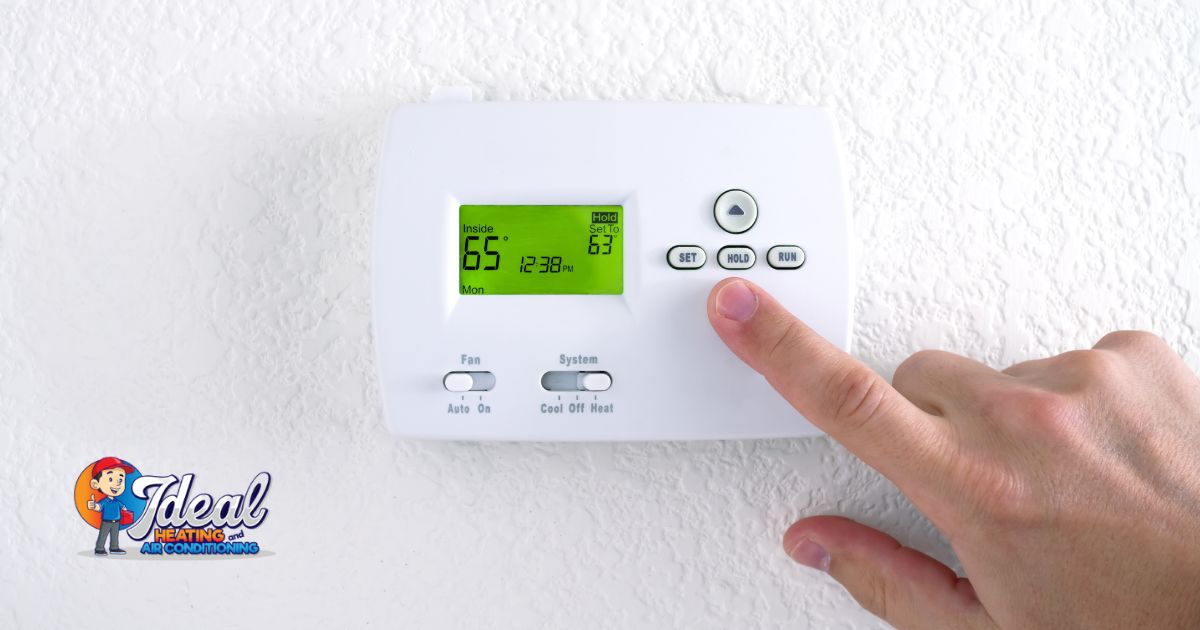
Do you have one bedroom that feels like a sauna while the living room is an icebox? This “zoning” issue is a classic sign of a failing system.
Why it matters:
This often means the system’s blower motor is weakening or the unit is no longer powerful enough to push air through your ductwork. In some cases, it means your system was incorrectly sized from the start, and as it ages, it can no longer “overwork” itself to compensate for that mistake.
Quick Diagnosis:
Use a simple digital thermometer to check different rooms. If there is a difference of more than 3–5 degrees between rooms on the same floor, your system is failing to distribute air properly.
6. Excessive Dust and Poor Air Quality
Your HVAC system is responsible for more than just temperature; it manages humidity and filters the air you breathe.
Why it matters:
If you notice more dust on your furniture than usual, or if the air feels “heavy” and humid in the summer, your system is failing to ventilate and dehumidify. Poor air quality can lead to increased allergy symptoms, dry skin, and even mold growth within your walls.
Quick Diagnosis:
Check your air vents. If you see visible dust or “streaking” around the registers despite regular filter changes, the system is no longer effectively cleaning the air.
7. It Uses R-22 Freon
If your AC was manufactured before 2010, it likely uses R-22 refrigerant (Freon).
Why it matters:
R-22 has been phased out globally due to environmental regulations. Because it is no longer produced, the cost of “recharging” a system with R-22 is astronomical—often costing as much as a small repair itself. If an R-22 unit develops a leak, it is almost always more cost-effective to replace the unit with one that uses modern, eco-friendly coolants like R-410A or R-454B.
Quick Diagnosis:
Check the sticker on your outdoor unit for the “Refrigerant Type.” If it says R-22, you should consider any major repair as a signal to replace.
Quick Comparison: Should You Repair or Replace?
| Feature | Repair the Old System | Replace with New System |
| Upfront Cost | Lower (Initial fix only) | Higher (Long-term investment) |
| Monthly Bills | High (Declining efficiency) | Lower (New SEER2 standards) |
| Reliability | Low (Parts may fail soon) | High (Brand new components) |
| Warranty | None (Or very limited) | Full 10-year+ parts & labor |
| Safety | Potential CO/fire risks | Modern safety shut-offs |
| Home Value | No impact | Increases resale appeal |
Not Sure When to Replace HVAC System?
We Can Help.


While a new HVAC system is a significant investment, it is also an investment in your home’s safety and your family’s comfort. Continuing to repair an ancient, failing unit is often like pouring money into a sinking ship.
At Ideal Heating, we don’t believe in “one-size-fits-all” answers. Our expert technicians specialize in diagnosing the health of your system and providing honest, non-technical recommendations. We will tell you if a simple fix will buy you another few years, or if a replacement is the only way to prevent a mid-winter emergency.
By partnering with Ideal Heating to optimize your system, you gain:
Maximized Efficiency: Precision tuning and calibration to restore peak performance, immediately reducing unnecessary run-time and lowering your monthly energy bills.
Expert Diagnostics: Accurate identification of hidden issues like refrigerant leaks or sizing errors that DIY maintenance can’t catch.
Peace of Mind: Confidence that your system is running safely and delivering the most comfort for the least cost.
Priority Service: Preferred treatment and rapid response times should any unexpected issue arise, saving you from stressful emergency situations.
Is your HVAC system ready for the season ahead? Don’t wait for a total breakdown in the middle of a heatwave or a freeze. Schedule a Comprehensive System Health Check with Ideal Heating today. We’ll give you a clear picture of your unit’s performance and help you make the best choice for your home and your budget.
With over 35 years of experience serving customers in the GTA and a 5-star rating on Google Reviews, we provide the ideal advice.